


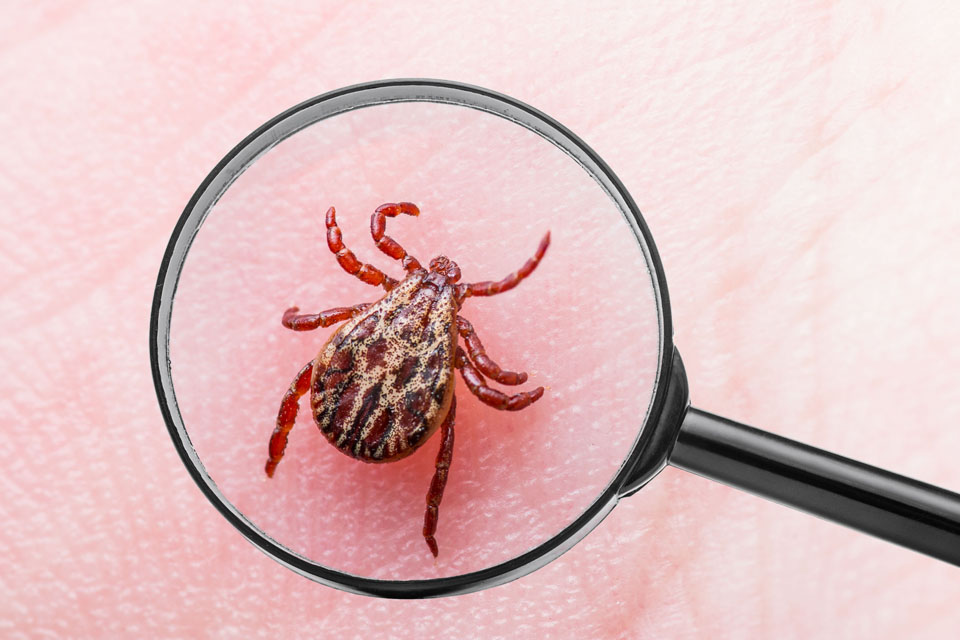
During spring and summer, increased time spent outdoors also means greater exposure to ticks. Most tick bites are harmless, but in some cases there is a risk of developing Lyme disease, which can be effectively treated when detected early.
One of the most characteristic early signs of Lyme disease is erythema migrans, a spreading red rash that develops around the site of the tick bite. Flu-like symptoms such as fever, headache, muscle and joint pain, and fatigue may also occur. However, a characteristic skin rash does not develop in every case, so symptoms should be assessed in the appropriate clinical context.
Laboratory testing is generally recommended when symptoms suggestive of Lyme disease develop after a tick bite, or when a skin lesion is not clearly characteristic of erythema migrans. Blood testing immediately after a tick bite in an otherwise symptom-free person is generally not informative, as antibodies may not become detectable until several weeks after infection.
Laboratory diagnosis of Lyme disease is based on a two-step serological testing approach. The first step is a screening test, typically an ELISA, which detects antibodies produced by the immune system, including IgM and IgG. If the result is positive or borderline, a confirmatory test such as a Western blot or immunoblot may be performed to provide more specific information.
A positive antibody result indicates that the immune system has been exposed to the pathogen, but it does not necessarily mean that an active infection is currently present. Borderline results require particular care in interpretation, as they may indicate an early infection but can also result from non-specific or false-positive reactions. Laboratory findings should therefore always be evaluated together with the patient’s symptoms and medical history.
Medical consultation plays a key role in establishing the diagnosis and determining whether treatment is necessary. Laboratory results alone are not sufficient; the complete clinical picture must always be taken into account when making an appropriate medical decision.
Frequently Asked Questions
How long after a tick bite should I have a blood test?
Generally, testing is more informative around 2–4 weeks after the bite, as this is when antibodies may become detectable. The appropriate timing depends on the symptoms and clinical circumstances.
Is Lyme disease testing necessary after every tick bite?
No. Testing is generally not recommended in people who have no symptoms. However, medical evaluation is advisable if symptoms develop.
What does a borderline result mean?
A borderline result is inconclusive and may require additional testing or repeat sampling, depending on the clinical situation.
Can Lyme disease be treated?
Yes. When diagnosed appropriately, Lyme disease can generally be treated effectively with antibiotics.
Are laboratory results alone sufficient to diagnose Lyme disease?
No. Diagnosis requires medical evaluation that takes the symptoms, medical history and laboratory findings into account.